

The History of Cannabis in the United States
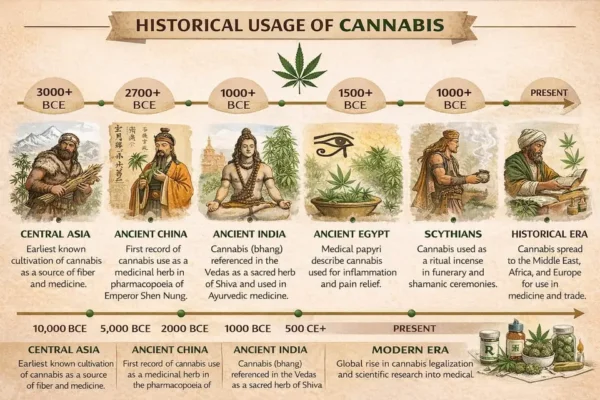
Pre-Columbian Natives of the Americas
After the arrival of European settlers, Native Americans began cultivating and harvesting hemp in the Americas only to a limited extent. Since Cannabis is native to Central and East Asia and not the Americas, it was not traditionally part of the ancient cultures of Native American Indian peoples. However, native peoples in Asia used it for cordage included in the production of rope, thread, nets, baskets, hunting snares and food among other things, throughout their history. The arrival of Cannabis in the United States came via European trade. It traveled east from Asia into Europe, then traveled even further west from Europe into the Americas aboard trade ships.
1545: Spanish colonizers were the first to bring and deliberately cultivate hemp in the Americas. They sowed hemp seeds in Quillota near Valparaíso, Chile to make rope and rig ships for the Spanish empire. This was decades before other European powers established permanent settlements in North America.
1606: French botanist Louis Hébert planted cultivated hemp crops in Nova Scotia.
The Dutch traded and utilized hemp extensively as they expanded their colonial footprints in the 17th century, though after the Spanish and French agricultural roots began.
The First Cannabis Wave: England’s First Pro-Hemp Colony in the Americas, Jamestown, Virginia
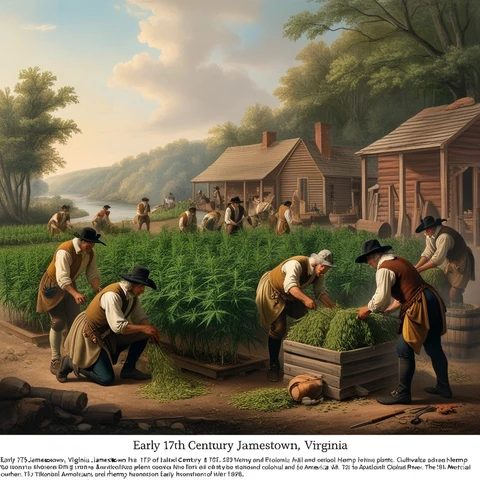
English colonists growing hemp in early 17th Century Jamestown, Virginia
1616: By this time, the first settlements at Jamestown were already growing what they referred to as “Indian hemp seed” primarily for cordage and other uses. When it came to industrial textiles, hemp completely dominated the maritime and shipping industries. Every single ship required hemp for rigging, ropes, and heavy canvas sails. It was so dominant and essential to national security that colonies legally mandated farmers to grow it. When it came to actual everyday clothing, flax (used to make linen) and wool were the common fibers. Hemp fibers were historically very rough, stiff, and labor-intensive to process. While poor colonists did wear coarse hemp clothing, flax was much more widely preferred for garments because it was softer against the skin.
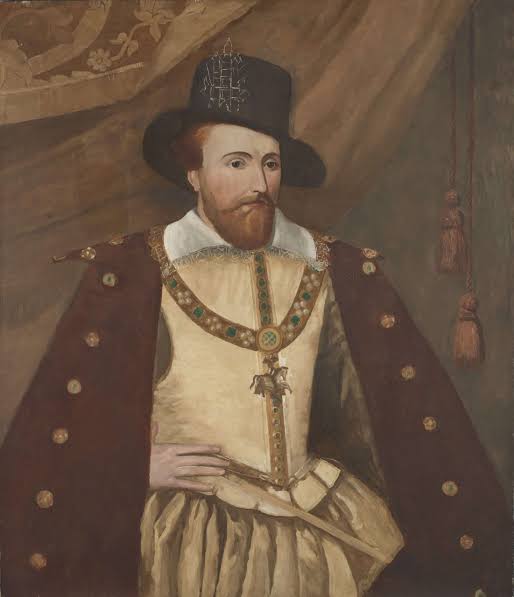
King James I of England (1566-1625)
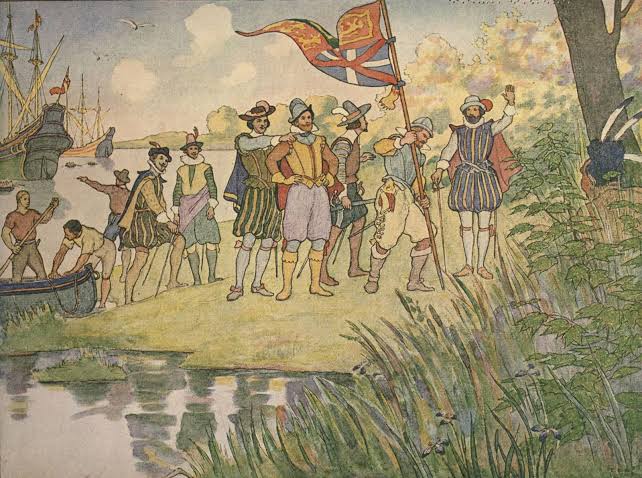
Captain John Smith and The Virginia Company at Jamestown, Virginia (1607)
1619: King James I decreed (by royal proclamation) that hemp should be grown in the English colonies to support England. All English colonists were required to grow at least one acre of hemp on their property for export to England or pay a fine. The Virginia Company was relied upon to enact this decree. Later, colonists would grow hemp to support themselves. Similar requirements to grow hemp appeared and were enforced in such states as Massachusetts and Connecticut.
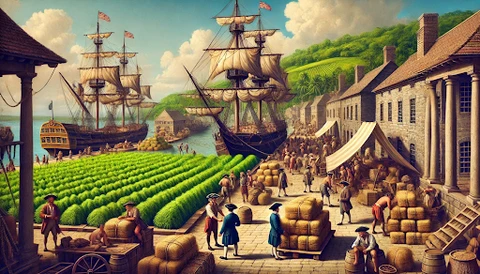
These images depicts the economic role of industrial hemp as well as tobacco in colonial America.
Specifically, they are AI-generated illustrations showing how a bustling 18th-century farm and port with farmers, merchants and various other workers would have been packaging and loading large bales of harvested hemp onto transatlantic sailing ships.
1631: Hemp was approved as a legal form of currency in the U.S. It even became legal to use hemp to pay taxes with.
1645: Historical documents show that even the Puritans were growing hemp, by this period.
United States and Cannabis: A Close Historical Relationship
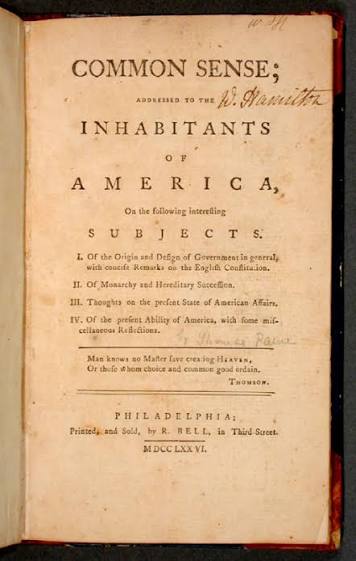
Writers like Thomas Paine used mixed-fiber and hemp-based paper for influential early colonial political pamphlets during the American Revolution.
Famous Works and Documents Associated with Hemp Paper
- The Gutenberg Bible: Johannes Gutenberg printed his famous 42-line Bible on rag paper that included hemp fibers.
- Literary Works: Books and novels by authors such as Mark Twain were traditionally printed on durable, rag-based paper containing hemp.
- Early Drafts: Working drafts of historical texts, including early working papers from the founding era, were commonly penned on whatever rag paper was locally available, which often incorporated hemp fibers alongside flax and linen.
- Urban Legends: Gossip traditionally credits Betsy Ross with making the first American flag and the Founding Fathers with making the first two drafts of the U.S. Constitution out of hemp fiber. Both stories are fictional as no credible evidence has been found to support either.
Throughout the 17th, 18th and 19th centuries, hemp was grown everywhere to some degree in the area of the new nation, for a variety of reasons. In the time of our founding fathers, such as George Washington and Thomas Jefferson, high fiber hemp was as always grown for cordage, not smoking or ingesting. High fiber cannabis is excellent for cordage as opposed to high resin hemp. The most common uses for cordage included: to supply bale rope, nets, canvas sails for ships, paper (compared to wood pulp, hemp paper resists decomposition and doesn’t yellow or brown with age), thread, yarn and fabric for multiple uses including clothing, carrying-sacks and blankets. Eventually, in the 19th century, it was introduced into the field of medicine.
1793: One Founding Father, Gouverneur Morris, wrote about hemp in a letter to Thomas Jefferson. At the time, Jefferson was serving as the U.S. Secretary of State, and Morris was in France acting as a diplomat and American statesman. Morris wrote the note to contrast the civic and economic value of the two crops:
“A Fact well established in the System of Agriculture is that the best Hemp and the best Tobacco grow on the same Kind of Soil. The former Article is of first Necessity to the Commerce and Marine, in other Words to the Wealth and Protection of the Country.”
The Rise and Fall of the 19th Century Medicinal Cannabis Industry
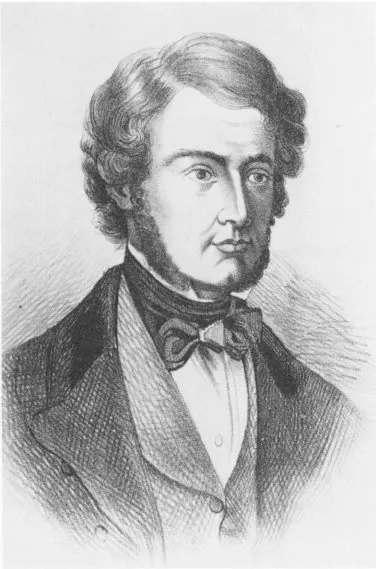
Irish physician Sir William Brooke O’Shaughnessy
1839: Sir William Brooke O’Shaughnessy (an Irish physician) used his work in chemistry and pharmacology to bring Cannabis Sativa to western medicine, as a pharmaceutical therapy. After he began treating his patients with cannabis, other physicians in the west followed suit. Consequently, by the 1850’s cannabis became intertwined within the early field of American pharmacology. During this period, cannabis became ubiquitous in pharmacies and even eventually made a common appearance in what was often called “snake oil.”
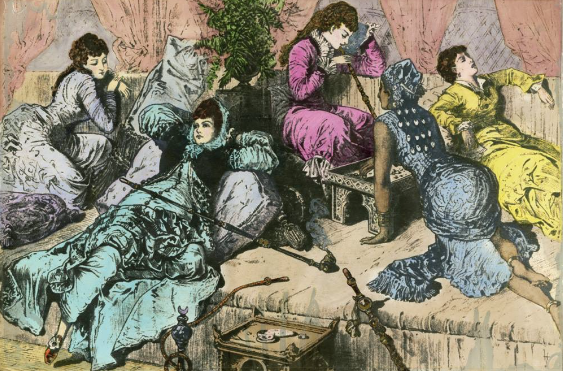
Hash Marihuana & Hemp Museum print reproduction shows “Interior of a Hasheesh Hell on Fifth Avenue,” originally published in the Illustrated Police News on December 2, 1876. It depicts five elegantly dressed women in an exotic parlor, reflecting 19th-century “jouensensationalism” surrounding secret urban vices. At this time, hashish parlors were a fashionable past time for the affluent classes of the east coast.
1853: Cannabis was eventually considered popularly acceptable and became common in many areas, as a “fashionable narcotic.” By the 1880’s, hashish parlors were actively just as common and accessible as opium dens, all along the north east coast. It’s estimated that there may have been approximately 500 such parlors in New York City alone, at that time. In Harper’s Magazine (1883), Harry Hubbell Kane discussed how the “better classes” frequented these New York parlors. Likewise, such parlors existed in cities like Chicago, Boston and Philadelphia.
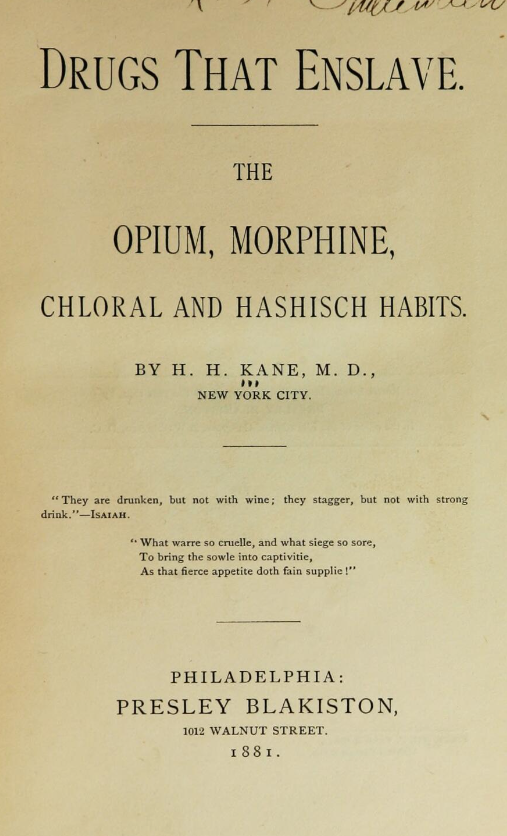
This image shows the title page of the 1881 medical publication “Drugs That Enslave: The Opium, Morphine, Chloral and Hashisch Habits” by Dr. H. H. Kane of New York City, published in Philadelphia by Presley Blakiston.
However, it was also during this period that concerns regarding mislabeling and poisoning in products were arising, alongside this hashish ubiquity. In turn, this led to action by state governments and the beginning of laws governing pharmaceuticals in the United States. By 1880, many states listed cannabis as a potential poison. Even California viewed cannabis as a potentially dangerous substance. In 1880, California introduced a bill that stated: this is “an act to regulate the sale of opium and other narcotic poisons…preparations or mixtures made or prepared from opium, hemp or other narcotic drugs” are absolutely illegal without a doctor’s prescription. Furthermore, only licensed pharmacies could prepare or sell such concoctions or therapies.
The Mexican Revolution: Cannabis and Race
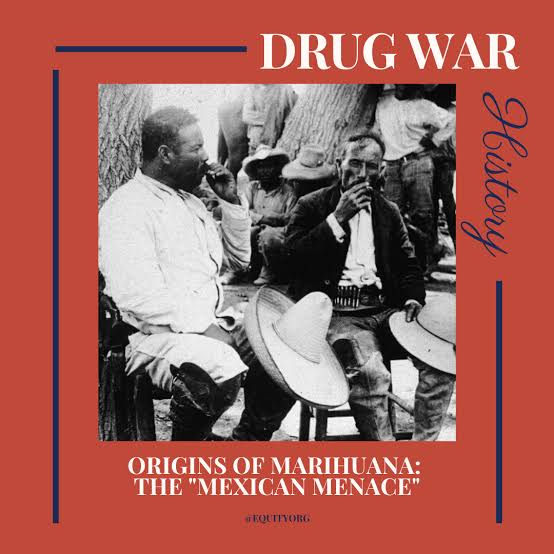
General Francisco “Pancho” Villa (seated left, leaning against a tree) with General Porfirio Ornelas following his surrender at Sabinas, Coahuila, Mexico in July 1920. This was taken just prior to the peace talks between Pancho’s remaining revolutionary forces and the Mexican Federal Government. The historic photo has been repurposed in digital media to discuss the early 20th-century history and political framing of cannabis.
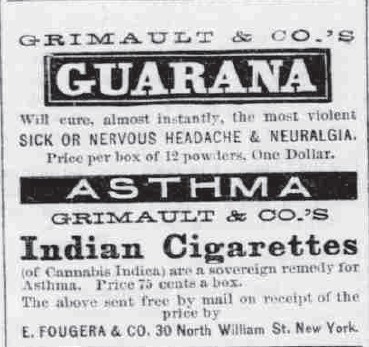
Grimault & CO.’s “Indian Cigarettes” usually contained a blend of Cannabis Indica, belladonna, and datura rather than standard tobacco.
1874: It became known that cannabis cigarettes were commonly being smoked by Mexican soldiers, as opposed to tobacco, in moments of leisure. Although the southern states (California, Nevada, Utah, New Mexico, Arizona and parts of Texas, Colorado, Wyoming, Oklahoma and Kansas) were taken from Mexico and absorbed into the growing nation, many Mexican people still remained on the land and practiced long standing traditions. Their sharing of culture especially between the southwest and pre-established ties with Mexico bled east into the part of American culture that was shifting from east into the west itself. Often, liquor was far too expensive for the average Latino soldier to afford. In time, eventually the practice of smoking cannabis (whether through a joint or a hashish pipe) spread through the United States via the processes of immigration (both west to east and east to west) and cultural assimilation.
1905: By this year, 29 out of 45 states had cannabis laws restricting or governing the use of cannabis, according to the U.S. Department of Agriculture.
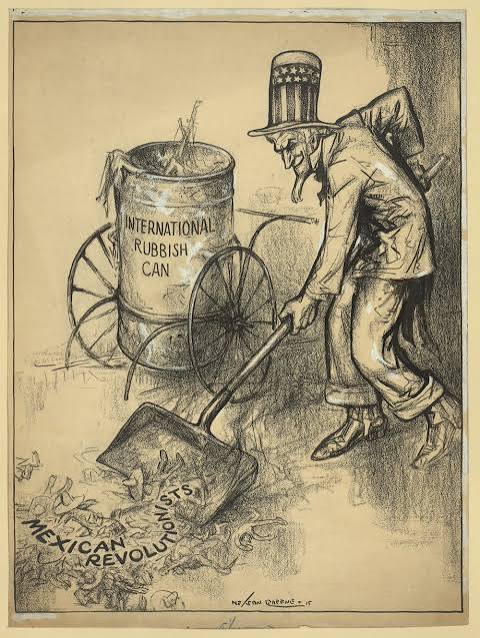
Published in 1915 by American cartoonist Nelson Greene, this political cartoon depicts Uncle Sam using a shovel to sweep up “Mexican Revolutionists” into an “International Rubbish Can”. This reflects the average American sentiment at the time over their incoming southern neighbors.
1910: Heavy Mexican immigration into the United States began after the Mexican Revolution of 1910. It had become custom by this point for Mexicans to smoke cannabis cigarettes after working a long day of hard manual labor in the fields. Incidentally, it was a far less expensive alternative than other means of intoxication, such as liquor. However, hostility and tensions arose as Mexican workers displaced many American workers, especially during the Great Depression. This hostility towards cheap Mexican labor increased, as the country’s economic future began to decline. As a result, cannabis became inextricably linked during this period to people of color. Alternatively, if you were a proper respectable person, you drank your drug out of a glass. Over time, this connection between color and cannabis became clearly viewed as a product of the racism that grew out of American fears over heavy immigration and economic instability.
The Second Cannabis Wave: 20th Century Legislative Restrictions Begins
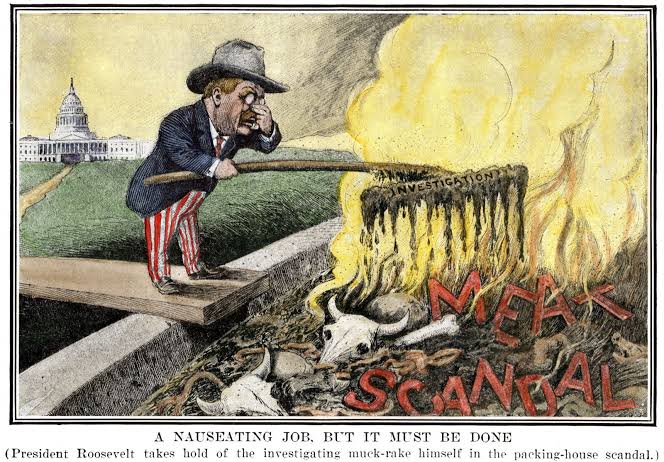
1906 political cartoon titled “A Nauseating Job, but It Must Be Done” depicts President Theodore Roosevelt holding his nose while using an investigation rake to “muck-rake” the “Meat Scandal.”
1906: Upton Sinclair’s book “The Jungle” absolutely outraged the American public, exposing filthy conditions in Chicago meatpacking plants. This prompted President Theodore Roosevelt to order an investigation and to use public pressure to push Congress into passing “The Pure Food and Drug Act.” This required all foods and drugs to be clearly labeled, including even medicines and therapies that have a patent. Protected ingredients considered “secret” became a thing of the past, when it came to pharmaceuticals.
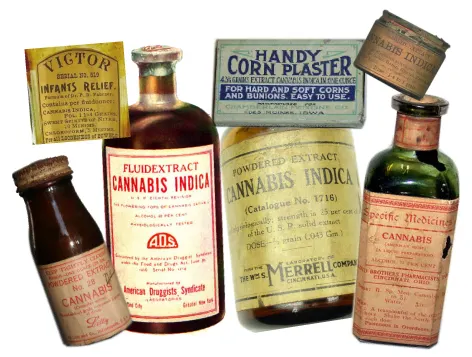
Surviving 19th Century bottles and packaging that once contained Cannabis.
Reform Legislation Passed:
Widespread reform legislation began to emerge across the country, as a result. States began passing their own laws in an attempt to restrict the spread of all “habit-forming drugs.” Among these 11 specific drugs were cannabis, alcohol, morphine, opium, cocaine, heroin and chloroform.
- California was the first state in the west to list cannabis as a poison through a series of legislative acts (1907, 1909, 1911, 1913 and 1915).
- Massachussettes (1911, The Towns-Boylan Act)
- New York (1914)
- Maine (1914)
- Wyoming (1915)
- Texas (1919)
- Iowa (1923)
- Nevada (1923)
- Oregon (1923)
- Washington (1923)
- Arkansas (1923)
- Nebraska (1927)
- Louisiana (1927)
- Colorado (1929).
1914: The Harrison Narcotics Act required narcotics manufacturers, sellers and distributors to register with the Bureau of Internal Revenue, under the U.S. Treasury Department. It was the first comprehensive U.S. law to regulate entire classes of drugs by limiting their non-medical use and prohibiting importation, such as opiates and cocaine. The Harrison Narcotics Act did not itself prohibit importation; rather, separate legislation like the Opium Exclusion Act of 1909 handled those specific bans. It imposed criminal penalties and required a strict accounting of prescriptions. Thus, began the process of criminalizing drugs.
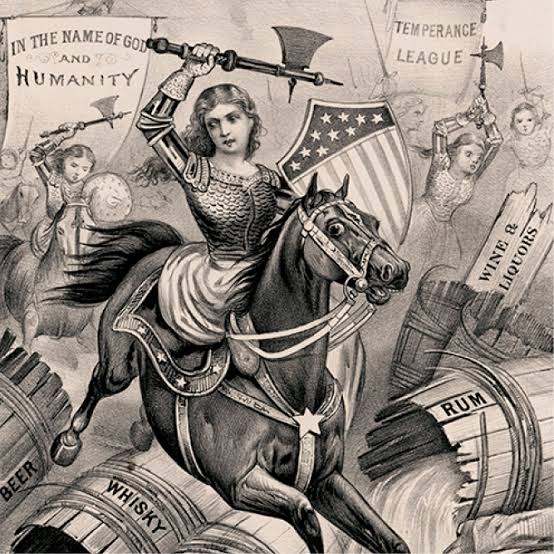
This image is the famous 1874 lithograph Woman’s Holy War. Grand Charge on the Enemy’s Works published by Currier & Ives, illustrating the 19th-century women’s temperance crusade against alcohol.
1918: Prohibition of alcohol quickly followed, as it was also considered a “habit-forming” drug. Hence, the concept of what was considered poisonous spread even into the realm of liquor. Eventually, America officially became a nation that was “dry,” as non-drinkers directed the nation’s tastes. Being a “T-totaler” (teetotaler) became a distinct identity in the United States, before and during Prohibition.
1922: The Federal Import and Export Act (also known as the Jones-Miller Act): passed in order to craft and, therefore, publish regulations, which strictly controlled or prohibited the importation and exportation of specific drugs/narcotics, in the United States. It was the first step in monitoring international commerce in opiates and coca. Opium dens and hashish parlors were often supplied by international commerce. Consequently, this also severely affected the cannabis trade.
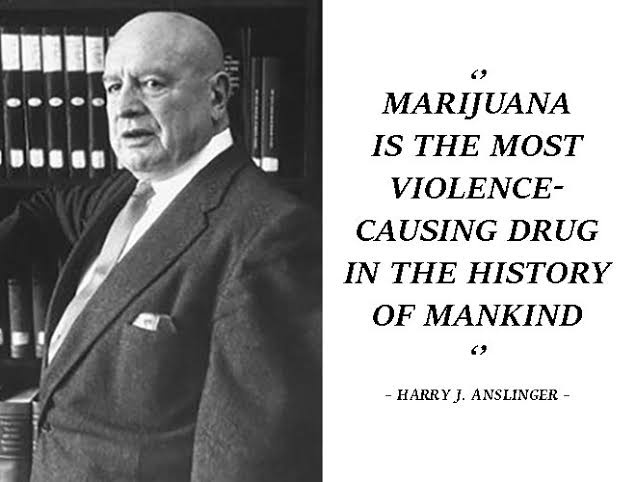
Henry J. Anslinger’s views on Cannabis.
1930: The Federal Bureau of Narcotics (FBN) was created and headed by Henry J. Anslinger and part of the government’s agenda, to end all recreational narcotics in the United States. Up to and throughout the 1930’s, anti-hemp propaganda led to a moral panic in America. The public was led to believe that hemp and marijuana were the very same plant and its existence in the United States would lower moral values, corrupt society and lead America down the path of complete ruin. According to Anslinger, cannabis caused people to participate in violence, experience some degree of psychosis and engage in hypersexuality. Such wild claims were later largely discredited, through the efforts of modern research.
Cannabis’ Altered Role in the New Economy
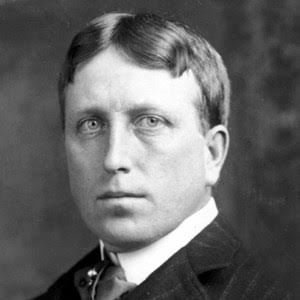
William Randolph Heartst
In the 1930’s, emerging industries on the rise wanted to replace hemp with their own products. 4 primary industries that either did not want economic competition with any form of hemp or indirectly benefited from hemp’s disappearance from the competitive American market are:
- The Liquor Industry: Cannabis was still legal during the Prohibition of alcohol and many people could not find bootleggers.
- The Cotton Industry: Indirectly benefited from the downfall of hemp in the textile industry.
- The Timber Industry: Argued that paper should be made from wood pulp, not hemp fiber.
- The Synthetic Plastics Industry: It’s been argued that William Randolph Hearst used “yellow journalism” during this period to convince the public that indulging in cannabis would lead to violent crimes. Many academic scholars have argued that this was designed to destroy the cannabis industry by Hearst, Andrew Mellon and the DuPont family. Nylon created by the DuPont family was cheaper than hemp pulp, making the new nylon a far more desirable product. This was because producing fiber from hemp was a very labor-intensive process, making it a distinct disadvantage.
1936: The Geneva Trafficking Conventions were designed to attack and suppress illegal traffic in dangerous drugs/narcotics, including “cultivation, production, manufacture and distribution” of “opium, coca, cannabis for non-medical and non-scientific purposes.” The United States eventually refused to sign the final version of the draft because it was considered too weak of a document to support, in order to adequately address the issues they were most concerned with.
The Anti-Cannabis Movement Hits the Movies
1936: The anti-Cannabis Movement finally arrived on the big screen and became infamous throughout America. Films such as Assassin of Youth and Reefer Madness opened with the claim that the “real public enemy number one” is marijuana…”we must work untiringly so that our children are obliged to learn the truth, because it is only through knowledge that we can protect them…”. Reefer Madness is a story about impressionable young teenagers driven to miscegenation, abortion, unwed motherhood, murder, venereal disease, and many other tawdry subjects by the simple introduction of cannabis into their lives. The year after its release, the federal government passed the first tax on cannabis. By 1936, “pot” hysteria was largely stemming from prejudice over Mexican immigrants in the southwest. Newspapers at the time repeatedly commented on America’s “degenerate Spanish-speaking residents.” Public officials were claiming that “Mexicans” were responsible for selling marijuana “mostly to white school students.” By this point, the stigma assigned to cannabis was evident in the newer Mexican word “Marijuana”, which had largely replaced the historical word “hemp” in the social media and the legislative world of the U.S..
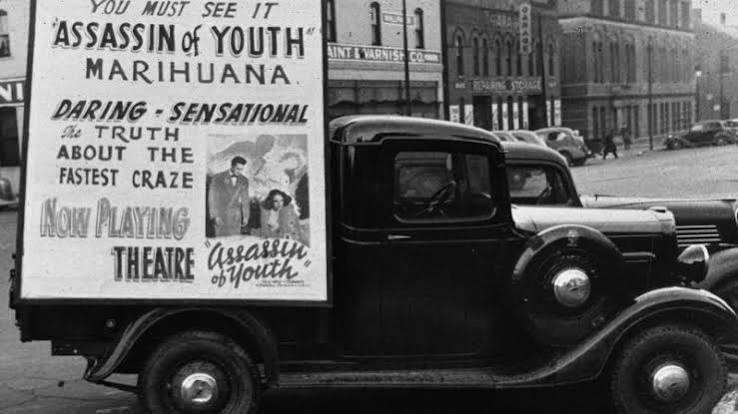
“Assassin of Youth” was released in 1937.
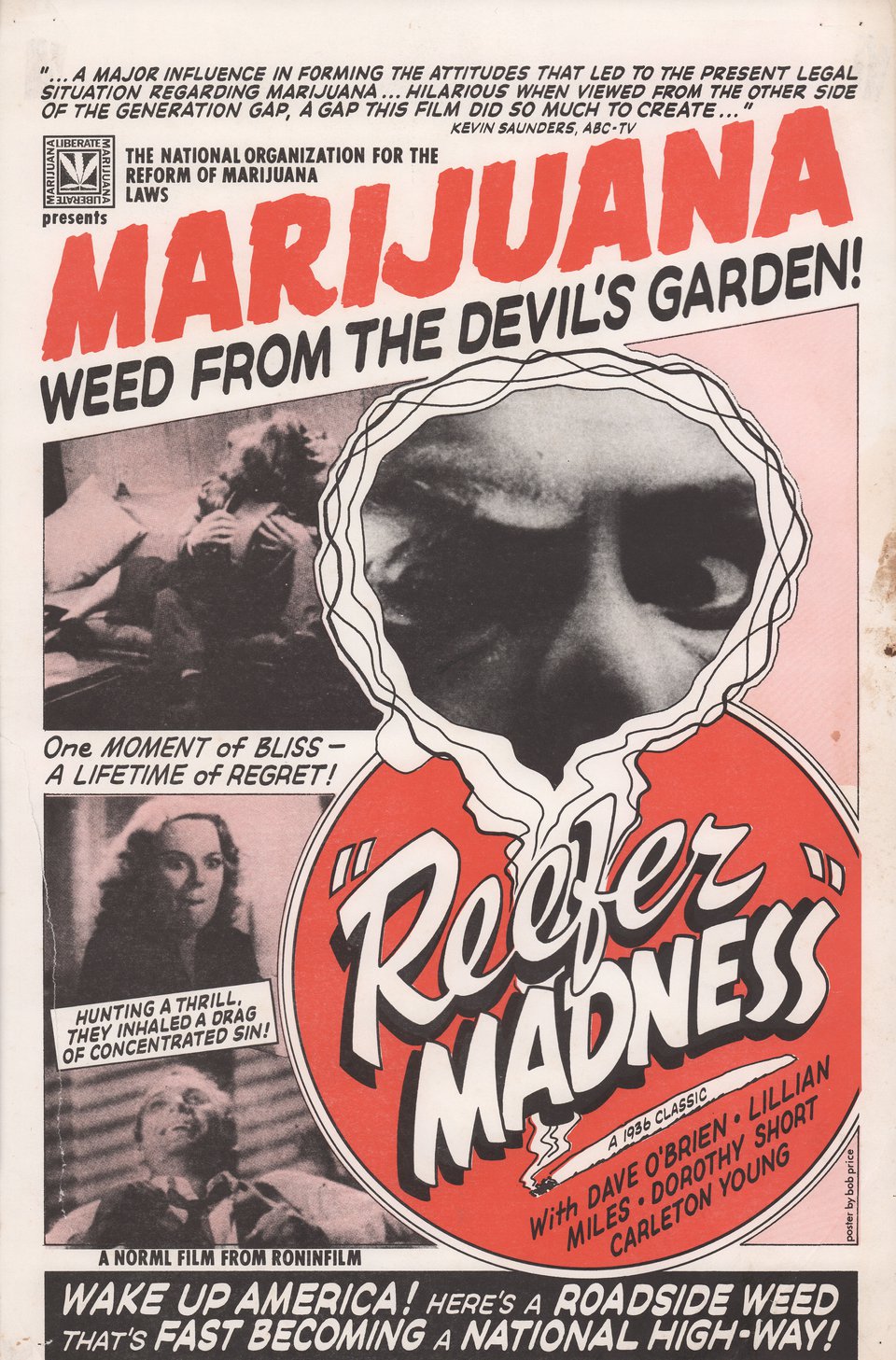
“Reefer Madness” was released in 1939.
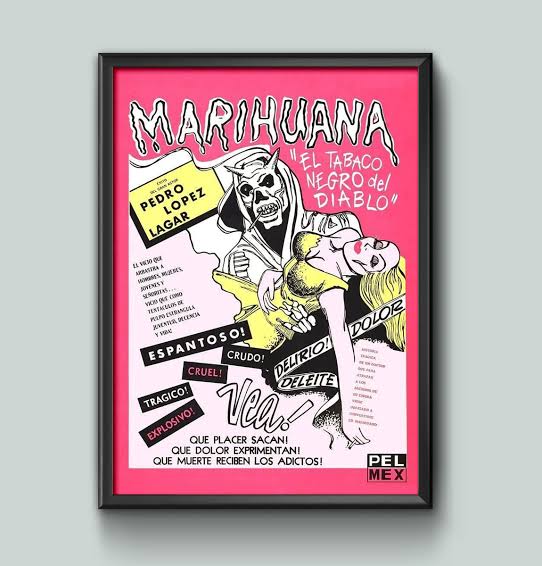
A reproduction of the vintage 1950 Mexican anti-drug movie poster for “Marihuana” (also known as “The Marihuana Story” or “El Tabaco Negro del Diablo”).
Legislative Restrictions on Cannabis Continue…
1937: The Marijuana Tax Act: in effect, this act made the transportation or possession of cannabis illegal in the United States. It was designed to regulate hemp in the United States through the use of an excise tax on all hemp sales. This also included sales of cannabis in medicinal therapies. The American Medical Association (AMA) opposed the new cannabis tax because even doctors who prescribed cannabis-based tinctures and therapies were taxed through the new act.
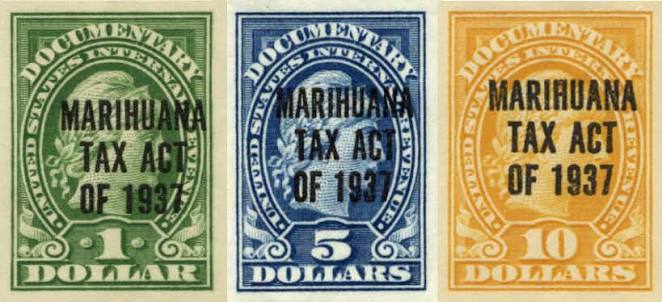
Examples of stamps used during The Marijuana Tax Act, 1937.
1938: The Food, Drug & Cosmetic Act (Part II), updated to the Federal Pure Food, Drug and Cosmetics Act: this law exerted new control over cosmetic and medical devices, even those prescribed by a physician. It also required clear labeling of ingredients, along with specific, clear directions for safe usage. Furthermore, the manufacturer of that product had to prove that the product was safe to distribute to the public. The enforcing agency became what we know as the Food and Drug Administration (FDA). This act is still in effect today.
Some Noble American Cannabis Enterprises
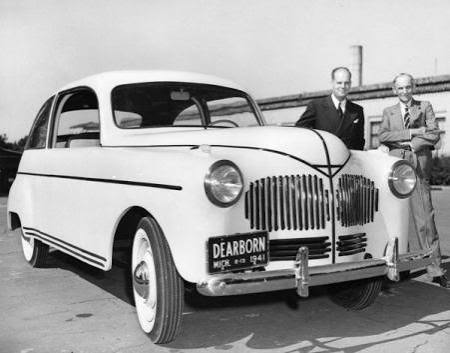
Henry Ford’s “hemp car.”
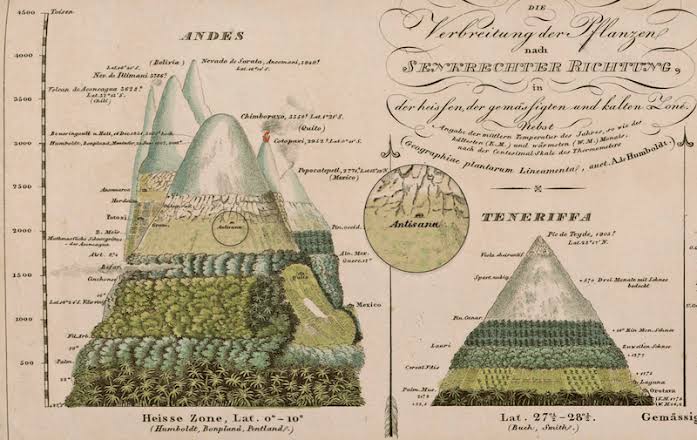
This image is an adaptation of Alexander von Humboldt’s famous 1807 “Naturgemälde” (or Tableau Physique), which serves as a vital historical baseline for measuring the real-world impacts of global warming. This drawing revolutionized science by illustrating that nature is a single interconnected system dictated by climate, temperature, and elevation. Humboldt used this precise framework to become one of the first scientists to warn that human actions—like deforestation and land clearing—could trigger human-induced climate change.
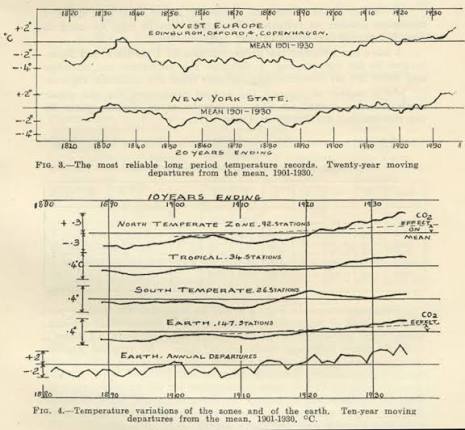
This graph is a monumental milestone in climate science, representing the first empirical evidence directly linking human-induced carbon dioxide ((text{CO}_{2})) emissions to global warming. Published by British engineer and amateur meteorologist Guy Stewart Callendar in 1938, it established what is historically known as the “Callendar Effect.”
1941: Henry Ford built his famous “hemp car”, also called the “soybean car.” It ran on ethanol, made from agricultural waste, including hemp…basically, hemp fuel. The bioplastic Model T was constructed from pulp processed from hemp, spruce, wheat and flax. Consequently, the car was supposedly far stronger than steel and significantly lighter in weight than even fiberglass. Although in 1807, Alexander Humboldt predicted human-induced climate change and in 1938, Guy Stewart Callendar demonstrated that greenhouse gasses were increasing the Earth’s temperature via increased CO2 emissions…the car failed to succeed. Building the car during this anti-cannabis era doomed it to oblivion, despite the awareness of these predictions. In 1925, Ford was quoted in the New York Times:
- “The fuel of the future is going to come from fruit like that sumach out by the road, or from apples, weeds, sawdust – almost anything. There is fuel in every bit of vegetable matter that can be fermented. There’s enough alcohol in one year’s yield of an acre of potatoes to drive the machinery necessary to cultivate the fields for a hundred years.”
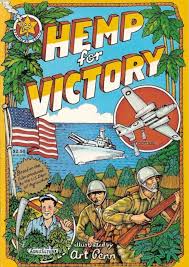
Example of one of the posters used during WWII to motivate Americans to grow hemp for the war effort.
1942: During WWII, the Marijuana Tax Act of 1937 was temporarily lifted, so that the Department of Agriculture and the U.S. Army could ask American farmers to grow high fiber hemp, necessary for the war effort. 400,000 acres of hemp were grown between 1942 and 1945. Some of the common items produced included light fire hoses, parachute webbing, twine/yarn, cable, burlap, canvas, bootlaces, as well as ropes and nets for the U.S. Navy. One battleship alone required approximately 34,000 feet of rope just to function. In 1957, the last commercial hemp fields were planted in Wisconsin. Afterwards, hemp returned to its former de-facto illegal status.
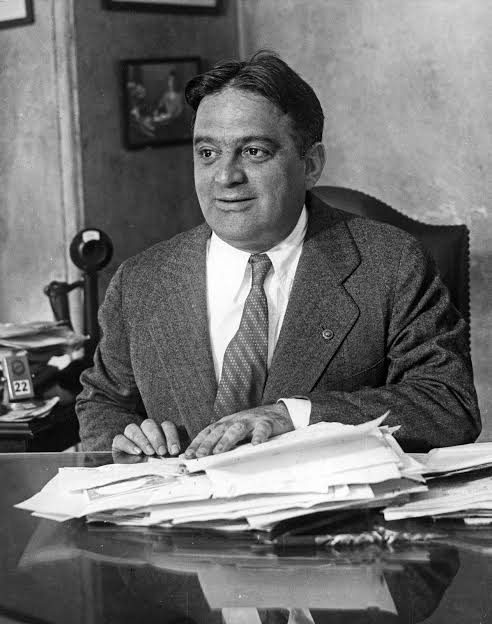
1944: New York mayor Fiorello LaGuardia established the LaGuardia Commission, to research the effects of cannabis. The New York Academy of Medicine issued an extensively researched report declaring outright that, contrary to earlier research and current popular belief, the use of cannabis does not induce violence, insanity, sex crimes, nor lead to addiction or other drug use. Hence, the LaGuardia Committee Report contradicted all earlier reports of addiction, madness and overt sexuality. This report was largely ignored by legislative bodies.
Mid to late 20th Century Legislative Restrictions on Cannabis Dramatically Escalate
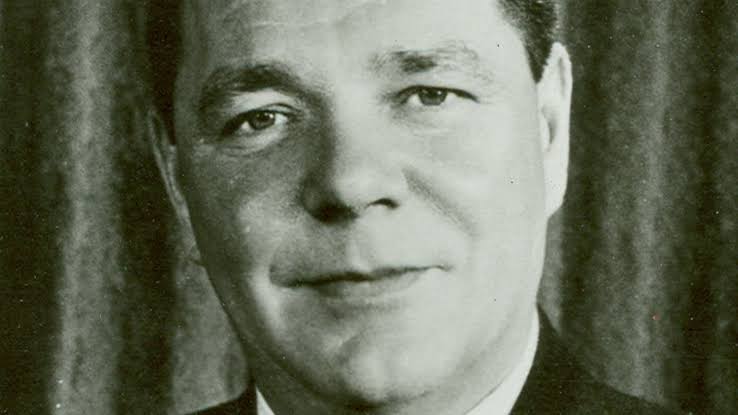
Louisiana Congressman (D), Hale Boggs
1952: The Bogg’s Act set mandatory offenses for drug related offenses, including what was called at the time “marijuana.” Minimum sentence for a first offense was 2-10 years, with a fine of up to $20,000. The act was sponsored by Hale Boggs, a Louisiana Democratic Congressman who felt that current legislation governing cannabis was too soft and lenient. On January 4, 1952, over 500 people were arrested under the provisions outlined in the act.
1956: The Narcotics Control Act strengthened the enforcement of existing laws regarding illegal drug trafficking. It prescribed heavier penalties for possessing or selling opiate drugs, cocaine and marijuana, including capital punishment. In 1970, Congress repealed these mandatory penalties for cannabis offenses.
1968: Several government departments merged to create the Bureau of Narcotics and Dangerous Drugs (BNDD), under the Department of Justice. This new bureau was charged with the responsibility of preventing any illicit traffic in narcotic, stimulant and depressant drugs. Furthermore, it had the power to oversee and control the legitimate manufacture of such drugs for medicinal purposes.
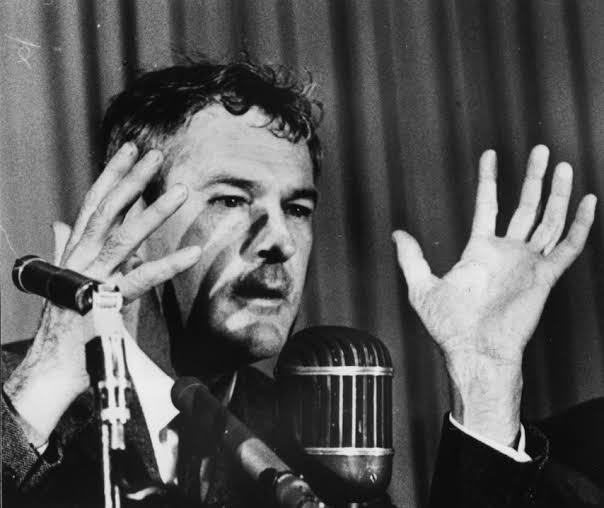
Cannabis activist and counter-culture icon Timothy Leary.
1969: In Leary vs. United States, Timothy Leary (university professor and activist) was arrested for marijuana possession. The U.S. Supreme Court held that the Marijuana Tax Act of 1937 to be unconstitutional, as it violated his 5th Amendment right against self-incrimination. Leary claimed it violated his constitutional right to due process, by compelling him to expose himself to self-incrimination. This repealed the Marijuana Tax Act. This led to the elimination of mandatory minimum sentences and reduced simple possession of all drugs from a felony to a misdemeanor.
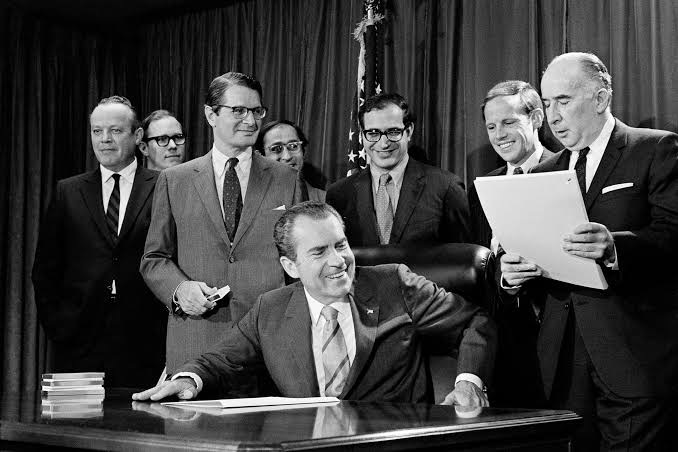
Nixon signs the “Controlled Substances Act” into law.
1970: President Richard Nixon signs the “Controlled Substances Act” into law. Cannabis becomes classified as a Schedule I drug. The U.S. Supreme Court decided that if a “defendant is shown to have or to have had possession of the narcotic drug, such possession shall be deemed sufficient evidence to authorize conviction unless the defendant explains the possession to the satisfaction of the jury.” In response to the Court’s decision, Congress passed the Controlled Substances Act as Title II of the Comprehensive Drug Abuse Prevention and Control Act of 1970. The CSA was enacted by the 91st U.S. Congress and signed into law by President Richard Nixon, in 1970. The statute was an effort to combine all previous federal drug laws and allow for federal law enforcement of controlled substances, serving as the legal foundation in the federal fight against drug abuse.
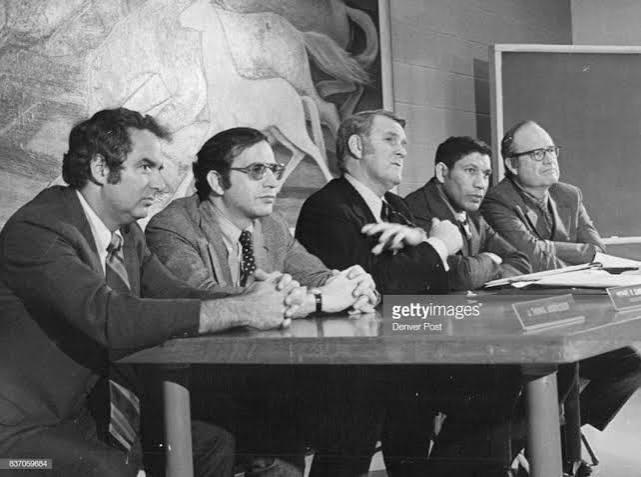
1972: The Shafer Commission led by former Pennsylvania Governor Raymond P. Shafter, which argued for the decriminalization of marijuana possession. The White House ignored the report but it represents the presence of a small undercurrent that was alive and well in ‘72, motioning against cannabis prohibition.
1973: Under the Nixon administration, the Bureau of Narcotics and Dangerous Drugs (BNDD) and the Office of Drug Abuse Law Enforcement (ODALE) merged to create the Drug Enforcement Agency (DEA). It was tasked with combating illicit drug trafficking and distribution within the United States. Furthermore, it has the power to coordinate and pursue drug investigations, both domestically and internationally.
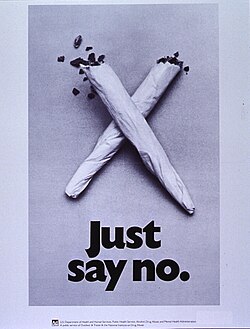
1984: Under President Ronald Reagan, the Comprehensive Crime Control Act established mandatory sentencing guidelines. The new law raised federal penalties for marijuana possession and sales, basing the penalties on the amount of the drug involved. For example, possession of 100 cannabis plants received the same penalty as 100 grams of heroin.
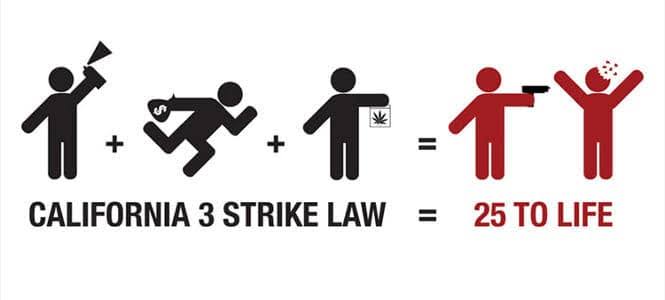
1986: The Anti-Drug Abuse Act reinstated mandatory prison sentences. This eventually led to the “Three Strikes Law” thereby creating a mandatory 25-year sentence and allowed capital punishment for “drug kingpins.” The bill enacted new mandatory minimum sentences for marijuana. This led to serious racial and class imbalances in America’s prison system. People of color experienced harsher sentences than their affluent, Caucasian counterparts, over use of the same drug.
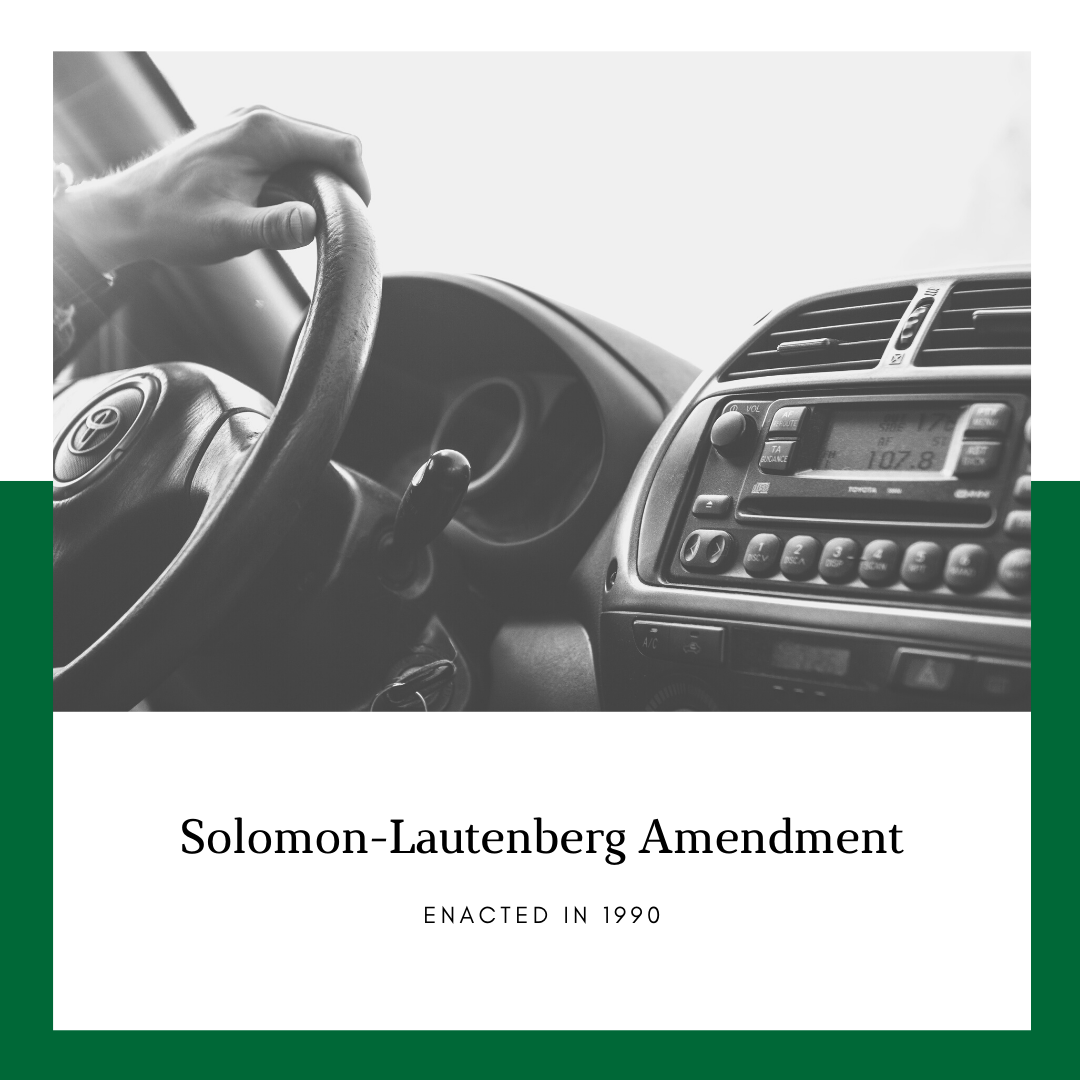
1990: The Solomon Lautenberg Amendment is a federal law that urges states to suspend the driver’s license of anyone committing a drug offense. The penalty for states who failed to comply with the new law included a sizable decrease in their federal highway funding. “Smoke (or possess) a joint, lose your license” laws emerged throughout the country. However, an opt-out provision was available and utilized by states to avoid non-compliance. As of 2021, only 3 states have not taken advantage of the opt-out provision: Alabama, Arkansas and Florida.
As time passed, awareness began to spread that under the 10th Amendment, the federal government has no authority to regulate medicines. The 10th Amendment only grants the federal government the powers that are strictly outlined within the U.S. Constitution. The power to regulate medicines is a right reserved to individual states. Considering this, a tax was historically and traditionally considered as the only viable way to regulate cannabis. Eventually, cannabis began to emerge from the shadows of its own prohibition as states across the nation began to initiate the re-acceptance of cannabis, at the grassroots level. Thus began a “populist” movement to bring cannabis back to society as an acceptable, therapeutic and safe plant for personal use.
The Third Cannabis Wave: The Rise of Populist Cannabis and the Politics of Compassion
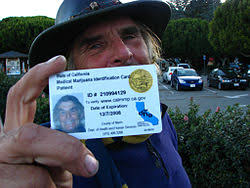
1996: The Compassionate Use Act arose because initially, medical cannabis legislation was immediately vetoed and blocked by California Governor Pete Wilson. Eventually, after repeated frustrated efforts to bring medical cannabis to the public, cannabis advocates took the “Medical Marijuana” issue directly to the voters. After collecting 775,000 signatures for qualification of a statewide ballot initiative in 1996, California voters approved Proposition 215. It was the first state to legalize the medicinal use of cannabis. Afterwards, California was followed by:
- 1998: Washington, Oregon, Alaska, Nevada and the District of Columbia;
- 1999: Maine;
- 2000: Colorado and Hawaii.
1998: House Joint Resolution 117 occurred once California voters approved Proposition 215, which legalized “Medical Marijuana.” The House Joint Resolution was passed in response, to demonstrate their opposition to the efforts by states like California. It declared their support for the system already in place, which was based upon the idea of supporting “the existing Federal legal process for determining the safety and efficacy of drugs” and directly opposing “efforts to circumvent this process by legalizing marijuana…for medicinal use without valid scientific evidence and FDA approval.”

2001: The United States vs. Oakland Cannabis Buyers’ Cooperative was a direct federal effort to shut down state-sanctioned medical cannabis distribution, effectively undercutting the practical application of California’s Proposition 215. In response to Proposition 215, this cooperative was established to “provide seriously ill patients with a safe and reliable source of medical cannabis, information and patient support.” The federal government sued the cooperative. On May 14, 2001, the U.S. Supreme Court ruled against the cooperative. The Court’s argument stated that federal anti-drug laws do not allow exceptions to be made for medical cannabis and that according to the Controlled Substances Act of 1970, cannabis has “no currently accepted medical use.”
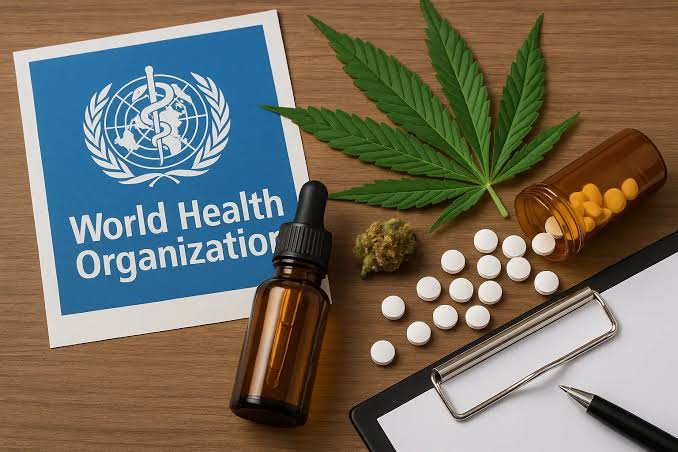
2003: The World Health Organization (WHO) advised that tetrahydrocannabinol (THC) be reclassified under Schedule IV during the duration of the Expert Committee on Drug Dependence (ECDD). They stated that their own investigation found that there were legitimate medical uses for THC and they also found that the incidence of abuse and potential for addiction were actually quite low.
Cannabis and States’ Rights
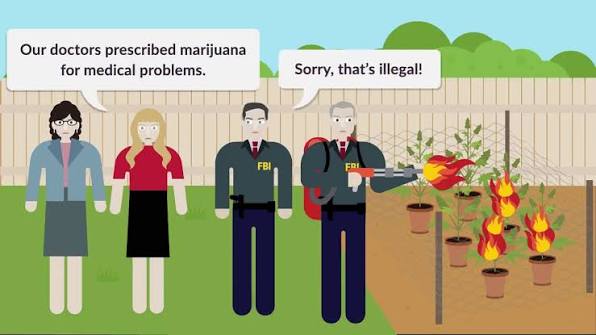
2005: In Gonzales vs. Raich, the U.S. Supreme Court ruled that even state-approved medical cannabis programs still violated federal marijuana laws. The Court ruled that the U.S. Controlled Substances Act grants the federal government jurisdiction to prosecute marijuana offenses. In order to fight against state-approved cannabis legislation and commerce, the DEA made it a point to routinely target and arrest medical cannabis patients and prosecute all sales involved. In addition, they also routinely chose to seize the business assets of growers and medical dispensaries. This was finally curtailed in 2014 with the Rohrabacher-Farr Amendment.
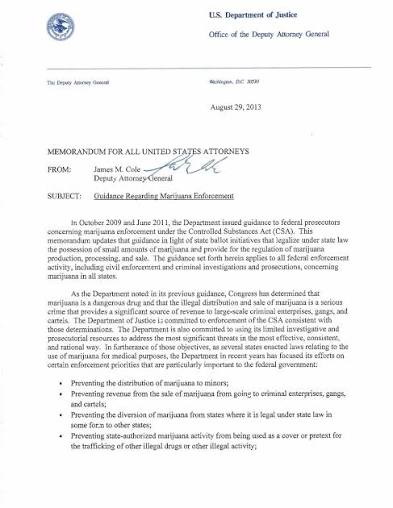
The actual Cole Memorandum.
2013: In the Cole Memorandum, Deputy Attorney General James Cole issued a directive to federal prosecutors, also called the “Obama-era directive“. It stated that individuals and businesses who complied with established state cannabis laws were not to be targeted. However, the memo failed to prevent federal enforcement of medical cannabis.
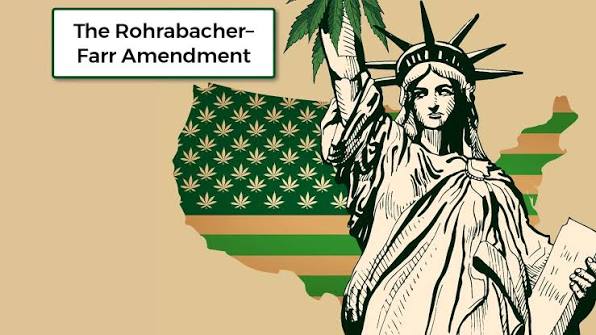
2014: The Rohrabacher-Farr Amendment (also known as the Rohrabacher-Blumenauer Amendment): U.S. Representative Maurice Hinchey introduced the legislation in 2001. This prohibited the Justice Department from spending public funds to interfere with the attempted implementation of state medical cannabis laws. The federal-state dichotomy regarding cannabis and its interpretation began to shift slightly in favor of medical marijuana.
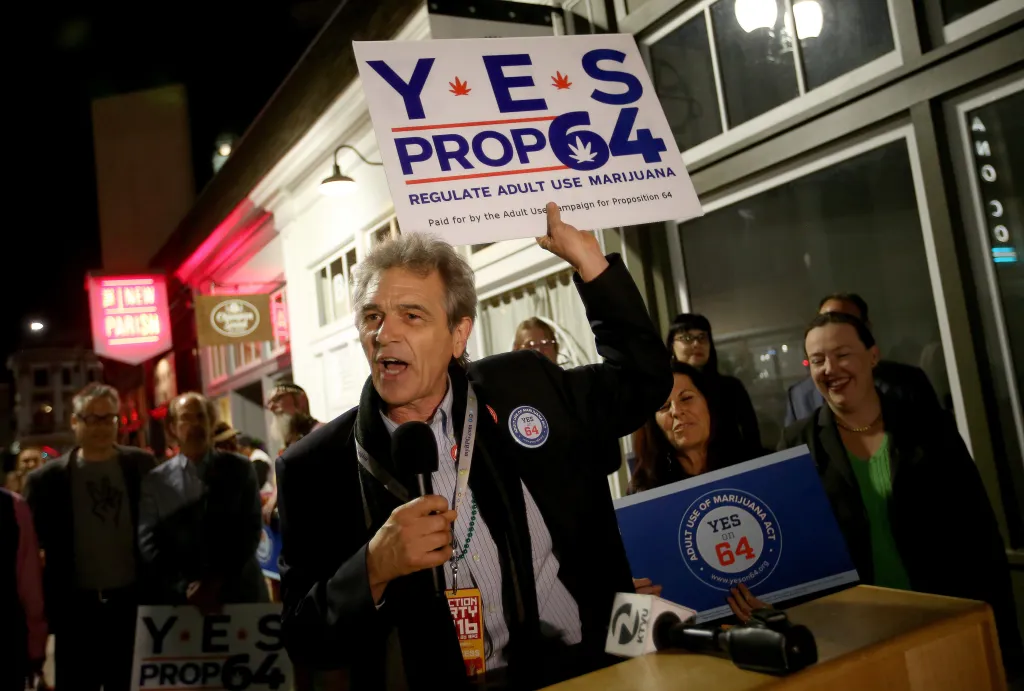
2016: Voters approved Proposition 64 (57% pro). California was the 5th state in the nation to recreationally legalize marijuana. According to the Public Policy Institute of California, most citizens of the state see the results as a positive thing.
The First Five States:
- Colorado: Legalized in November 2012 by voter ballot (Amendment 64).
- Washington: Legalized in November 2012 by voter ballot (Initiative 502).
- Oregon: Legalized in November 2014 by voter ballot (Measure 91).
- Alaska: Legalized in November 2014 by voter ballot (Measure 2).
- California: Legalized in November 2016 by voter ballot (Proposition 64).
2018: Cole Memorandum rescinded: Attorney General Jeff Sessions refused to support the 5 year old memo, citing violation of the Controlled Substances Act of 1970. He stated that the memo “undermined the rule of law and the ability of our local, state, tribal and federal law enforcement partners to carry out this mission.” This ended the “Obama-era directive” which generally discouraged federal enforcement against state-legal cannabis enterprises.
Cannabis Research, Farming, and the Future
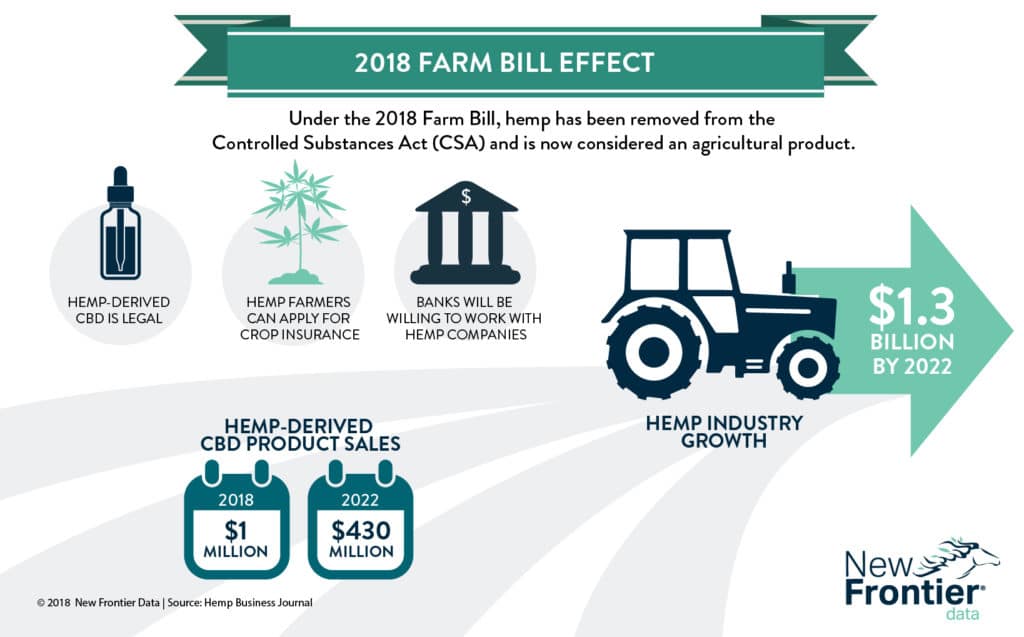
2018: The Farm Bill (also called The Agricultural Improvement Act) federally legalized hemp and transformed the modern cannabis industry. It authorized the production of hemp and removed hemp & hemp seeds from the DEA’s schedule of Controlled Substances. CBD from hemp was also effectively legalized. The Farm Bill significantly widened the availability of federally legal CBD products, derived from hemp.
Key Impacts of the 2018 Legislation:
- Redefined Hemp: It removed cannabis plants and derivatives containing 0.3% or less of Delta-9 THC (dry weight) from the federal Controlled Substances Act.
- Ended the Federal Ban: It allowed licensed commercial farming, processing, and interstate transport of hemp-derived goods.
- Created the CBD Boom: It opened the door for legal sales of non-intoxicating, hemp-derived compounds like cannabidiol (CBD) and inadvertently sparked markets for other legal cannabinoids.
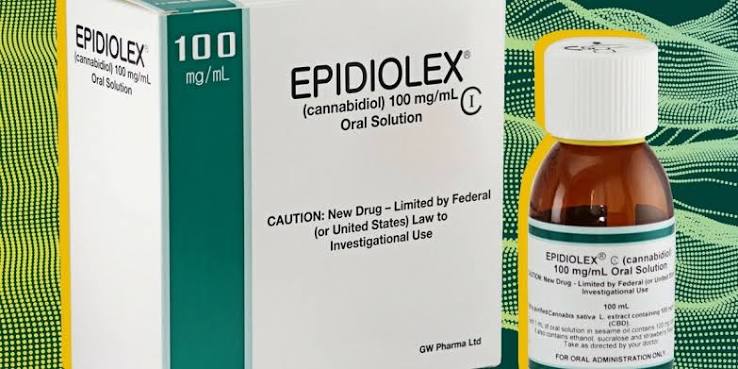
2018: Epidiolex is the first FDA-approved drug to be produced using cannabis, used in the treatment of specific types of seizures.
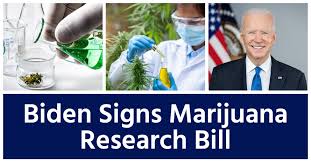
2022: President Joseph Biden signed The Medical Marijuana and Cannabidiol Research Expansion Act, which states that it “shall not be a violation of the Controlled Substances Act for a State-licensed physician to discuss the currently known potential harms and benefits of marijuana…as a treatment with the patient.” It simplifies the Schedule I research process, thereby allowing for marijuana research. It streamlines the development of FDA-approved medications, while protecting physicians who recommend cannabis to their patients from professional liability at the federal level. It protects the open channel of information passing between patient and doctor, as they discuss cannabis as a treatment option.
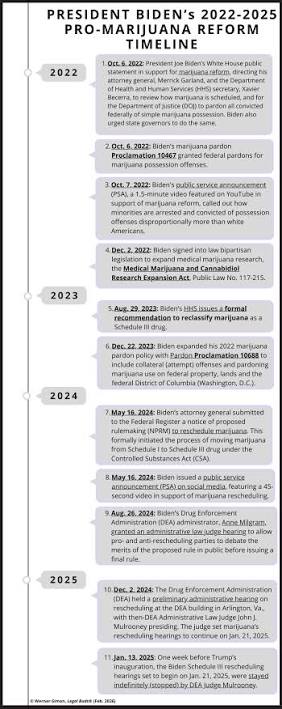
President Joe Biden’s 2022-2025 Pro-Marijuana Reform TImeline
2022: President Joe Biden declared publicly:
- #1: All prior federal offenses of simple possession of marijuana are pardoned;
- #2: Urged all state authorities to follow his example, in terms of state offenses;
- #3: Asked “the Secretary of Health and Human Services and the Attorney General to initiate the administrative process to review expeditiously how marijuana is scheduled under federal law.” He later stated that his position was based on the fact that the Schedule I classification of cannabis “makes no sense.”
2023: Following a review by the Federal Department of Agriculture, both the FDA and the Department of Health and Human Services issued a recommendation to the DEA that cannabis be removed as a Schedule I substance and be placed in Schedule III.
2023: Another report conducted by the Congressional Research Service (CRS) supported the FDA’s and the DHHS’s findings, advising also that marijuana be reclassified as a Schedule III drug.
While federal laws have stalled, several state legislatures passed historic cannabis legalization and medical framework statutes as of 2023:
- Delaware: Passed adult-use recreational legalization bills (House Bill 1 and House Bill 2) which became law in April 2023.
- Minnesota: Passed House File 100, signed into law in May 2023, legalizing adult-use recreational cannabis.
- Kentucky: Established a legal medical cannabis program via legislative action in 2023
2026: No major federal statutory legislative acts concerning cannabis have successfully passed Congress and been signed into law since 2023. Federal updates during this time frame have instead occurred via executive actions and agency processes—such as the administrative move by the Justice Department and DEA to reclassify state-licensed medical marijuana into Schedule III—rather than new acts of Congress.
24 States That Have Legalized both Medical and Recreational Cannabis as of 2026:
As of 2026, 24 states and Washington, D.C., have legalized both recreational and medical cannabis. In these states, adults age 21 and older can buy and possess cannabis, while comprehensive medical programs also exist for qualified patients
- Alaska
- Arizona
- California
- Colorado
- Connecticut
- Delaware
- Illinois
- Maine
- Maryland
- Massachusetts
- Michigan
- Minnesota
- Missouri
- Montana
- Nevada
- New Jersey
- New Mexico
- New York
- Ohio
- Oregon
- Rhode Island
- Vermont
- Virginia
- Washington
- Note: Washington D.C. has also legalized medical and recreational cannabis
States That Still Strictly Enforce Prohibitions Against Cannabis as of 2026:
- Idaho: Fully illegal for any medical or recreational use; some of the harshest penalties in the country.
- Kansas: No broad medical or recreational program allowed.
- Wyoming: Completely illegal for recreational or medical use, treating THC concentrates and edibles harshly.
- South Carolina: Recreational and general medical use remain outlawed.
- Tennessee: Cannabis remains classified strictly as an illegal controlled substance.
- Indiana: No comprehensive medical or adult-use cannabis framework exists.
- Wisconsin: Completely prohibits recreational and general medical marijuana use.
- North Carolina: General recreational and medical cannabis are illegal, though low-level possession is decriminalized in some local jurisdictions.
- Texas: While low-amount possession is a misdemeanor, having over 4 ounces or possessing any form of cannabis concentrates (like THC oils, dabs, or certain hemp-derived THC/edibles) is prosecuted as a felony.
States with Highly Restrictive Low-THC/CBD Laws
- Iowa: Recreational use is illegal, and broad medical dispensaries are not active, though limited low-THC exceptions exist.
- Georgia: Recreational use is prohibited, and the state only permits limited low-THC oil for specific registered patients.
- States like Iowa, Florida, and Arkansas allow medical cannabis, but possessing non-medical cannabis or exceeding legal possession thresholds transitions quickly from misdemeanor to felony tiers.
States Where Medical Cannabis is Legal but Recreational Cannabis is Still Illegal as of 2026:
These 16 states allow cannabis for qualifying medical patients with a valid card or through a qualifying physician’s recommendation, but recreational use remains illegal for adults in the following states:
- Alabama
- Arkansas
- Florida
- Hawaii
- Kentucky
- Louisiana
- Mississippi
- Nebraska
- New Hampshire
- North Dakota
- Oklahoma
- Pennsylvania
- South Dakota
- Texas
- Utah
- West Virginia
- (Note: While Virginia has legalized possession under state law, retail recreational sales have not yet launched as of mid-2026.)
No U.S. state has legalized recreational cannabis without also legalizing medical cannabis. In every state where adult-use (recreational) marijuana is legal, a medical cannabis program was either established first or implemented alongside it
Current Cannabis Status in the U.S. as of 2026:
- Recreational Use: Legal in 24 states and Washington, D.C.
- Medical Use (Comprehensive): Legal in about 40 to 41 states.
- Strictly Prohibited or Low-THC Only: Roughly 9 to 10 states do not have functional medical or recreational marijuana laws
Responses